

Ceasefire Extended: But Gold and Silver Tell a Different Story
by GivTrade Analyst Team
Markets got the headline they were hoping for: Donald Trump extended the U.S.–Iran ceasefire indefinitely, stepping back from earlier threats of renewed military action. Equity markets reacted instantly — rallying to fresh highs.
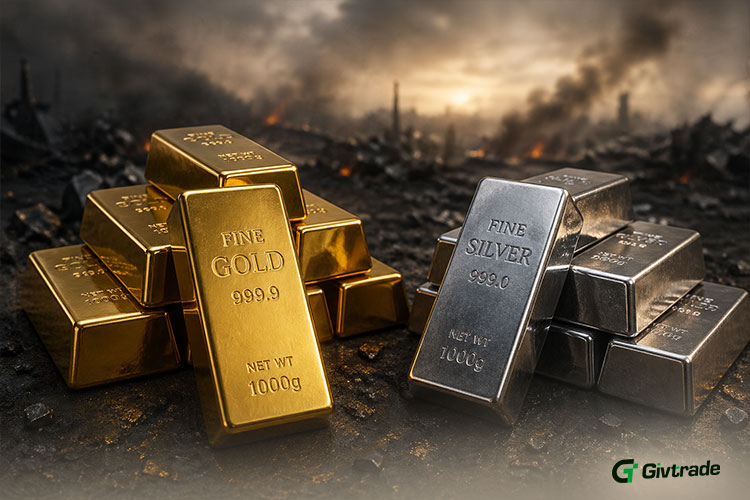
But precious metals? They moved in the opposite direction.
Gold and silver, typically seen as safe-haven assets during geopolitical stress, pulled back instead of pushing higher. That divergence is raising important questions for investors trying to read the current market environment.
At first glance, the reaction seems counterintuitive. A ceasefire should reduce uncertainty — and it did. But the key is what kind of ceasefire this actually is.
This is not a peace agreement. It’s a pause.
- The Strait of Hormuz remains blockaded
- Iran has shown no urgency to negotiate
- The U.S. continues naval pressure on Iranian-linked shipping
- Energy supply risks are still very real
Because of this, the “war premium” embedded in gold prices is fading — even while broader risks remain. That creates a unique squeeze on metals.
Gold has already retreated significantly since the conflict began, reflecting this shift in sentiment.
As Rhona O’Connell noted, institutional traders are staying cautious. Large positions are being avoided due to unpredictable geopolitical signals, leading to choppy and directionless price action.
While metals hesitate, equities are doing what they tend to do when uncertainty eases — they rally.
The S&P 500 has reached all-time highs, supported by strong corporate earnings and continued enthusiasm around artificial intelligence.
Key drivers behind the rally include:
- Nearly 80% of companies beating earnings expectations
- Strong momentum in AI and semiconductor stocks
- Continued investor confidence in tech-heavy indices like the Invesco QQQ Trust
- Positive performance from major companies like Boeing and Tesla
According to Rick Gardner, markets are forward-looking. Much of the geopolitical risk may already be priced in, which explains why new headlines are having less impact on equities.
If you want the clearest signal of how markets truly feel, look at oil.
Despite the ceasefire, crude prices have been climbing:
- West Texas Intermediate approaching $98 per barrel
- Brent Crude trading near $102
Oil has posted multiple consecutive days of gains — during a ceasefire.
That tells you something critical: energy traders are not convinced the conflict is resolved. They are pricing in:
- Continued supply disruption
- Ongoing tensions around the Strait of Hormuz
- Persistent inflation risks
This dynamic creates pressure on gold in the short term, as rising inflation expectations and higher yields can weigh on non-yielding assets like bullion.
What This Means for Investors
The current market environment is best described as “calm and chaotic at the same time,” a phrase echoed by Kenny Polcari.
Here’s how the pieces fit together:
- Stocks are driven by earnings strength and AI growth — and that momentum is real
- Gold and silver are caught between fading war fears and persistent inflation pressure
- Oil is signaling that the geopolitical risk is far from over
In short, markets are not moving in sync — and that divergence is where both risk and opportunity lie.
Final Thoughts
The ceasefire may have reduced immediate fears of escalation, but it hasn’t resolved the underlying conflict. Markets are reacting accordingly:
- Equities are pricing in stability and growth
- Metals are adjusting to a lower risk premium
- Oil is warning that the situation is still fragile
For investors, the takeaway is clear: don’t rely on headlines alone. Watch how different asset classes respond — they often tell a more honest story than the news itself.