

What Is Leverage in Forex Trading — and How Much Is Too Much? (2026)
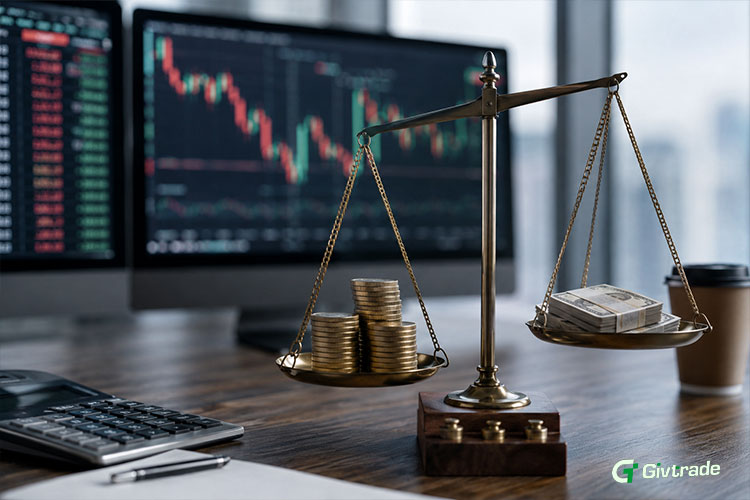
Leverage is the reason a $500 account can control a $50,000 position. It is also the reason most new traders lose money faster than they expected.
Understanding leverage is not optional background reading. It is the first thing every GCC trader needs to get right before placing a live position.
Used with discipline, leverage makes forex and CFD trading accessible without large upfront capital. Used without understanding, it is the fastest way to lose a deposit. The difference is not luck — it is knowing exactly what leverage does to your position, your margin, and your risk on every trade.
What Leverage Actually Is
Leverage is a multiplier. It allows you to control a position larger than the capital you deposit. A 1:100 leverage ratio means that for every $1 in your account, you can control $100 in the market.
The key number to understand is the margin requirement — the portion of your own capital held as collateral to keep the position open. At 1:100 leverage, the margin requirement is 1%. A $10,000 position requires $100 of your capital as margin. At 1:50 leverage, that same position requires $200. The lower the leverage, the more capital is tied up per position — and the more buffer you have before a margin call.
How Leverage Interacts With Position Size
Leverage does not change the size of the market move. It changes how much of that move you feel in your account.
On a standard lot of EUR/USD, each pip is worth approximately $10. At 1:100 leverage, opening that position requires $1,000 in margin. If EUR/USD moves 50 pips against you, that is a $500 loss — on a move that would barely register as significant on a daily chart.
This is the mechanism most GCC traders underestimate when starting. A routine intraday move, combined with the right position size and leverage ratio, can produce meaningful returns on a relatively small margin outlay. Experienced traders across the GCC use this to their advantage — opening well-calculated positions that would otherwise require significantly more capital, while keeping risk defined through a clear stop loss.
When leverage is applied with proper risk management, it is one of the most effective tools for maximising the return on capital deployed and as a company, Givtrade offers high leverages for its clients.
What Margin Is — and What a Margin Call Means
Margin is the collateral your broker holds while your position is open. It is not a fee — it is your own capital, temporarily set aside to back the trade. When the position closes, it is released back into your free balance, adjusted for the trade result.
A margin call occurs when your account equity falls below the broker's required margin level. At that point, positions are closed automatically to prevent further losses. On MetaTrader 5, margin level is displayed in real time as a percentage — (Equity / Used Margin) x 100. A margin level of 100% means you have no buffer. Knowing your broker's stop-out level before opening positions is part of every pre-trade checklist.
How Experienced GCC Traders Approach Leverage
The consistent habit across GCC traders who manage leveraged positions without large drawdowns: they calculate position size first, not last.
• Decide the maximum dollar risk per trade first. Most experienced traders risk 0.5–2% of account balance per trade. On a $1,000 account, that is $5–$20 per trade.
• Set the stop loss distance before calculating lot size. If the stop on EUR/USD is 40 pips and the maximum risk is $20, the correct lot size is 0.05 lots. The leverage ratio is irrelevant to this — it only affects margin required, not dollar risk.
• Check free margin before entering. If opening the position brings your free margin uncomfortably low, reduce the size. MT5 shows the margin required before the trade is confirmed.
• Avoid holding full-size positions through high-impact data. NFP, CPI and Fed decisions can move EUR/USD 80–150 pips in seconds. Track these on the economic calendar before every session.
The GivTrade Take
Leverage is the most misunderstood concept in retail forex — and the most misrepresented. It is marketed as the feature that makes large profits possible on small accounts. That is technically true. What is equally true, and less frequently stated, is that it makes large losses equally possible on the same account.
GCC traders who use leverage well treat it as a margin-efficiency tool, not a profit amplifier. Position size is determined by the stop loss and the maximum acceptable loss per trade. The leverage ratio determines how much margin is required — nothing more. That one reframe, applied consistently, separates disciplined leveraged trading from the reactive, oversized positions that drain accounts in the first month.
For a deeper read on managing risk across open positions, see our guides on how risk management works in forex trading and trading terms every beginner trader should know. Review account options including leverage specifications on the trading accounts page.
Frequently Asked Questions
What is leverage in forex trading?
A multiplier that lets you control a larger position than your deposited capital — at 1:100, $1,000 controls a $100,000 position, amplifying both gains and losses equally.
What is the difference between leverage and margin?
Leverage is the ratio; margin is the actual dollar amount set aside as collateral. They are inverse expressions of the same relationship — higher leverage means lower margin required.
What happens during a margin call?
When equity falls below the broker's minimum margin level, open positions are closed automatically. MT5 shows your live margin level percentage at all times.
How much leverage should a beginner use?
Focus on dollar risk per trade first — typically 1–2% of account balance — then size the position accordingly. The leverage ratio follows from that, not the other way around.
Does higher leverage automatically mean higher risk?
No. Risk is determined by position size and stop loss placement combined. High leverage on a small position carries less dollar risk than low leverage on an oversized one.
Risk Warning: Trading forex and Contracts for Difference (CFDs) on margin carries a high level of risk. Retail clients could sustain a total loss of deposited funds. This article is for informational and educational purposes only and does not constitute investment advice. GivTrade Mauritius, registration No. 197387, is authorized and regulated by the Financial Services Commission (FSC) License No. GB22201329.