

If the US-Iran War Ends Today, What Happens to Your Money?
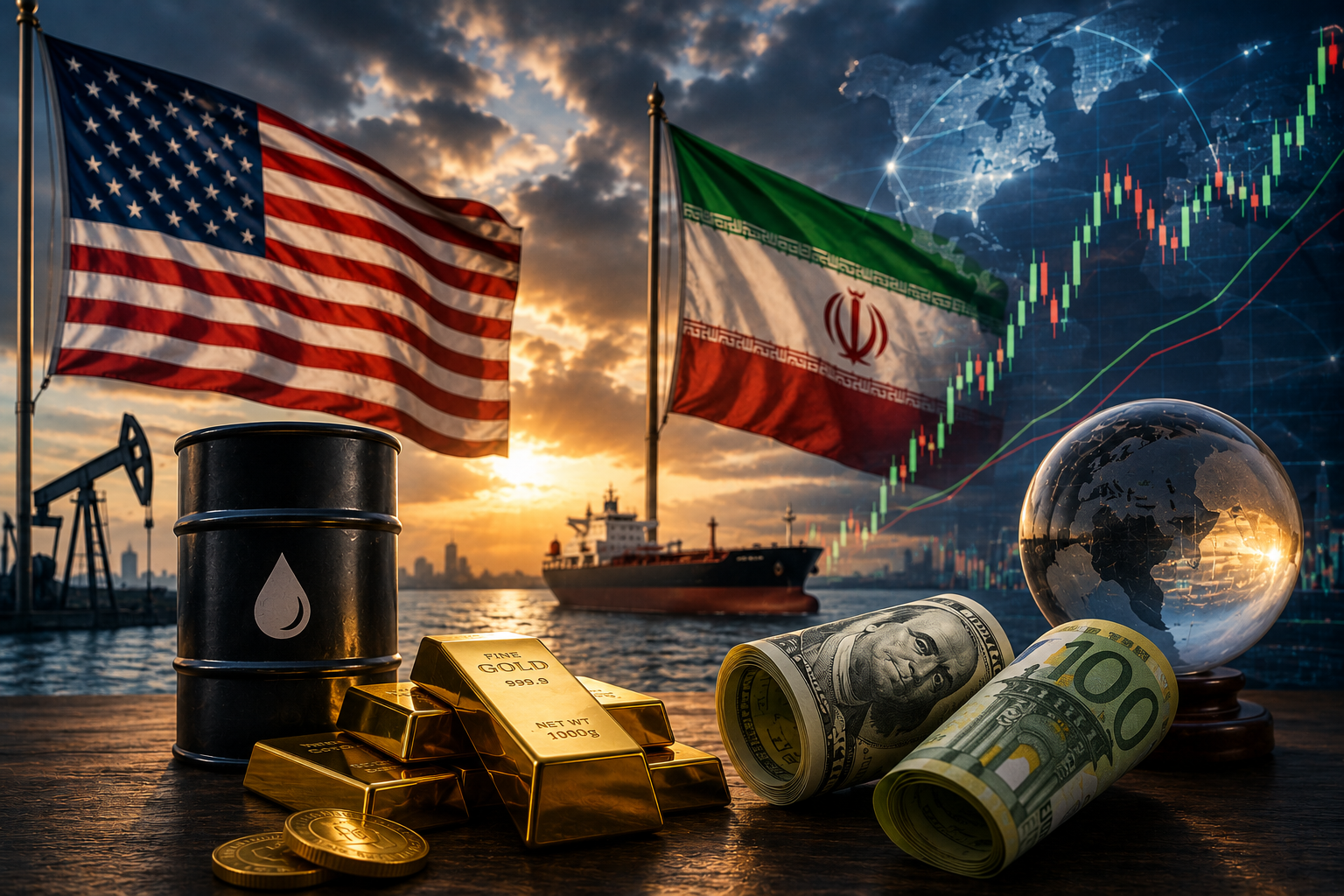
Global financial markets may be approaching a major turning point.
On May 23, 2026, President Trump stated that a peace framework between the United States and Iran had been largely negotiated. Multiple reports suggest both sides are moving closer toward an agreement involving the reopening of the Strait of Hormuz, reduced sanctions on Iranian oil exports, and easing military tensions in the region.
For traders in the UAE and GCC, this raises one critical question:
If the US-Iran conflict ends, what happens to oil, gold, the US dollar, and global stock markets?
With oil trading above $100, gold near record highs, and markets reacting to every geopolitical headline, a potential peace deal could reshape financial markets almost instantly.
What Is Included in the Proposed US-Iran Deal?
Current negotiations reportedly focus on three main stages:
- Ending military escalation and reopening the Strait of Hormuz
- Allowing Iran to resume oil exports with partial sanctions relief
- Beginning a broader negotiation process for a longer-term agreement
The agreement being discussed is not a permanent solution to every geopolitical issue between Washington and Tehran. However, markets are already reacting to the possibility of reduced conflict and restored oil supply.
Even before a final deal, Brent crude dropped more than 5% after reports of progress in negotiations. Markets are beginning to price in lower geopolitical risk and reduced inflation pressure.
What Happens to Oil Prices if a Deal Is Reached?
Oil Could Fall Sharply
Oil is expected to react the fastest and most aggressively to any peace announcement.
When the temporary ceasefire was announced earlier this year, Brent crude fell nearly 16% in a single session. A permanent agreement or full reopening of the Strait of Hormuz could trigger another major selloff.
Several factors support this scenario:
- Iranian crude supply returning to global markets
- Over 160 stranded oil tankers potentially resuming shipments
- The removal of the geopolitical “war premium” built into oil prices
Many analysts believe Brent crude could eventually return toward the $75–85 range if supply conditions normalize.
What This Means for Traders
For oil traders and CFD investors, a peace deal represents a major downside risk for long positions.
Oil markets tend to react within minutes to geopolitical headlines, making risk management essential during periods of uncertainty.
What Happens to Gold Prices?
Gold’s reaction is more complicated than oil’s.
During previous ceasefire announcements, gold prices actually moved higher as inflation fears eased and expectations for aggressive interest rate hikes declined.
A new peace agreement creates two competing forces:
Bearish Factors for Gold
- Lower oil prices reduce inflation concerns
- Reduced geopolitical fear lowers safe-haven demand
- Markets may expect lower volatility overall
Bullish Factors for Gold
- Potential weakness in the US dollar
- Continued central bank gold buying
- Long-term de-dollarization trends remain intact
This means gold may not immediately collapse on peace news the same way oil could.
Instead, traders will likely watch how gold behaves during the first 24–48 hours after any announcement to determine whether long-term bullish momentum remains strong.
What Happens to the US Dollar?
The Dollar Could Weaken
The US dollar has benefited heavily from geopolitical uncertainty throughout the conflict.
Safe-haven demand, rising oil prices, and inflation concerns all supported USD strength in recent months.
If tensions ease:
- Investors may move back into risk assets
- Demand for safe-haven dollars could decline
- Currency pairs like EUR/USD and GBP/USD may rally
A peace agreement would likely create a broader “risk-on” environment across financial markets.
What Happens to Stock Markets?
Global Equities Could Rally
A peace deal would likely be positive for stock markets worldwide.
Lower oil prices reduce operating costs for businesses, while easing inflation pressure may reduce the likelihood of future interest rate hikes.
Key reasons equities may rally include:
- Improved investor confidence
- Reduced geopolitical risk
- Lower inflation expectations
- Better global supply chain conditions
US indices such as the Dow Jones, Nasdaq, and S&P 500 could all benefit from a relief rally if negotiations succeed.
Why Markets May Still Remain Volatile
Even if a deal is announced, uncertainty does not disappear overnight.
Iranian Oil Supply Takes Time
Oil exports would not instantly flood the market. Supply normalization may take weeks or months.
The Nuclear Issue Remains Unresolved
Many underlying political tensions between the US and Iran would still remain active.
Markets may initially celebrate a peace agreement, but volatility could quickly return if negotiations weaken later.
What If No Deal Happens?
Markets are also preparing for the possibility that negotiations fail.
If talks collapse:
- Oil prices could surge again
- Gold may strengthen further
- The US dollar could regain safe-haven demand
- Stock markets may face renewed pressure
This is why traders across the UAE and GCC are closely monitoring every update related to US-Iran negotiations.
Final Thoughts
A US-Iran peace agreement would likely trigger one of the largest geopolitical market reactions of 2026.
Oil could fall sharply.
The dollar may weaken.
Stocks could rally.
Gold may experience conflicting pressures.
But the reality is simple:
Markets move fast during geopolitical events, and traders without a clear risk management plan often react emotionally instead of strategically.
At GivTrade, we believe preparation matters more than prediction.
The real question is not whether a deal happens. The real question is:
Is your portfolio prepared for what happens next?