

Kevin Warsh: The New Federal Reserve Chair Shaping Global Markets
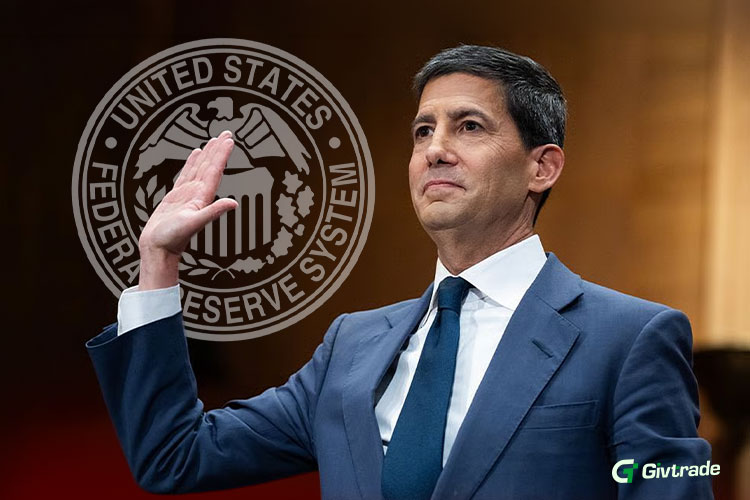
Most people have never heard of Kevin Warsh. Yet as of this week, he has become one of the most influential figures in global finance. As the new Chair of the Federal Reserve, Warsh now oversees U.S. interest rate policy, inflation strategy, and financial stability — decisions that directly affect mortgages, savings accounts, business loans, stock markets, and the cost of living worldwide.
His appointment marks a major turning point for the U.S. economy and global financial markets. Here’s everything investors need to know about the man now leading the world’s most powerful central bank.
Who Is Kevin Warsh?
Born and raised in Albany, Kevin Warsh built an elite academic and financial background before entering public service.
He studied public policy at Stanford University and later earned his law degree from Harvard Law School in 1995.
After graduation, Warsh joined Morgan Stanley, where he spent seven years working in mergers and acquisitions. During his time on Wall Street, he developed a reputation as a skilled dealmaker with deep knowledge of financial markets.
His career took a political turn in 2002 when he joined the administration of George W. Bush as a special assistant for economic policy.
Just four years later, Bush nominated Warsh to the Federal Reserve Board. At only 35 years old, he became the youngest Federal Reserve Governor ever confirmed.
Kevin Warsh and the 2008 Financial Crisis
Warsh became a central figure during the 2008 global financial crisis — one of the most dangerous periods in modern economic history.
Working closely with former Fed Chair Ben Bernanke and former New York Fed President Tim Geithner, Warsh helped coordinate emergency actions designed to stabilise the U.S. banking system and prevent a full financial collapse.
Inside the Federal Reserve, he was considered part of the “four musketeers,” a small inner circle responsible for guiding monetary policy through the crisis.
The experience shaped his economic philosophy. After leaving the Fed in 2011, Warsh openly criticised the central bank’s aggressive quantitative easing policies, warning they could eventually fuel long-term inflation pressures.
Years later, as inflation surged globally following the pandemic era, many analysts pointed back to those early warnings.
How Kevin Warsh Became Federal Reserve Chair
Warsh’s rise to the top job at the Federal Reserve was driven by both economics and politics.
During his first presidency, Donald Trump reportedly considered Warsh for the role of Fed Chair. According to multiple reports, Trump later told him: “I could have used you.”
Following his departure from the Fed, Warsh remained highly influential in conservative economic circles. He became a distinguished fellow at the Hoover Institution and later advised Trump’s 2024 transition team, maintaining strong ties within Republican leadership.
As the end of Jerome Powell’s term approached, the political battle over the future of the Fed intensified. Trump repeatedly criticised Powell for refusing to cut interest rates aggressively, creating one of the most politically charged transitions in Federal Reserve history.
Warsh ultimately emerged as the preferred candidate after a contentious Senate confirmation process. Republican Senator Thom Tillis temporarily blocked the committee vote while demanding the Department of Justice investigation into Powell be dropped.
Once the investigation ended, Warsh’s nomination advanced quickly.
The Senate confirmed him by a narrow 54–45 vote — the closest confirmation margin for a Federal Reserve Chair in modern history.
What Kevin Warsh Means for Markets
Financial markets are now closely watching Warsh’s leadership style and future policy decisions.
Investors view him as more hawkish on inflation than some recent Fed leaders, meaning he may prioritise price stability over rapid interest rate cuts.
His first Federal Reserve meeting as Chair is scheduled for June 16–17, and analysts across Wall Street will examine every statement for clues about future monetary policy.
At the moment, markets are pricing in a high probability that interest rates will remain unchanged. However, traders, banks, governments, and investors worldwide understand that Warsh’s words alone could move global markets within seconds.
Why Investors Should Pay Attention
The Federal Reserve remains the most powerful central bank in the world. Its decisions influence:
- Mortgage rates
- Inflation trends
- Stock market performance
- Currency strength
- Business investment
- Consumer spending
- Global liquidity
That means Kevin Warsh’s leadership will not only shape the U.S. economy but also financial conditions worldwide.
For traders and investors, understanding the philosophy and background of the new Fed Chair could become essential in navigating the next era of global markets.
Final Thoughts
Kevin Warsh may not yet be a household name, but his decisions are about to affect millions of people around the world.
From Wall Street dealmaker to crisis-era policymaker and now Chair of the Federal Reserve, Warsh’s journey places him at the centre of the global financial system at a time of rising economic uncertainty.
The world will now be watching closely to see whether his leadership ushers in tighter monetary discipline, a renewed fight against inflation, or a completely new direction for the Federal Reserve.