
ما هي نقاط الفوركس واللوت والرافعة المالية؟ دليل المتداول في الإمارات (2026)
جدول المحتويات
1. ما هي النقطة (Pip) في الفوركس؟
2. ما هو اللوت (Lot) في الفوركس؟
3. كيفية حساب قيمة النقطة بالدولار
4. ما هي الرافعة المالية في تداول الفوركس وعقود الفروقات؟
5. كيف تعمل الرافعة المالية: مثال عملي
6. الهامش (Margin): الإيداع المطلوب وراء كل صفقة برافعة مالية
7. كيف تعمل النقاط واللوت والرافعة المالية معاً
8. ما يحتاج متداولو الإمارات ودول مجلس التعاون الخليجي إلى تذكره
9. الأسئلة الشائعة
النقطة (Pip) هي أصغر حركة سعرية قياسية في زوج العملات. واللوت (Lot) هو وحدة قياس حجم التداول. أما الرافعة المالية فهي المضاعف الذي يتيح لك التحكم في مركز مالي أكبر من رأس مالك المودع. تظهر هذه المصطلحات الثلاثة في كل صفقة فوركس على أي منصة، والمتداولون في الإمارات ودول مجلس التعاون الخليجي الذين يفهمون كيفية ترابطها بالدولار يتخذون قرارات أفضل بشأن حجم مراكزهم مقارنة بمن يتعاملون معها كمصطلحات نظرية مجردة. يشرح هذا الدليل كل مفهوم بوضوح، مع الحسابات الفعلية بالدولار التي تنطبق على الصفقات الحقيقية.
ما هي النقطة (Pip) في الفوركس؟
النقطة (Pip) هي اختصار لـ "النسبة المئوية في النقطة"، وهي أصغر تغير سعري قياسي في زوج العملات. بالنسبة لمعظم الأزواج الرئيسية مثل اليورو/دولار أو الجنيه الإسترليني/دولار، تكون النقطة هي الخانة العشرية الرابعة في السعر.
يعد زوج الدولار/ين (USD/JPY) استثناءً مهماً؛ فبما أن الين يتداول بقيمة رقمية أعلى بكثير مقابل الدولار، فإن النقطة تقع في الخانة العشرية الثانية وليس الرابعة. تعرض العديد من المنصات الحديثة أيضاً "البيبِت" (Pipette) - وهي خانة عشرية خامسة - تمثل 0.1 من النقطة. ويقيس المتداولون الأرباح والخسائر بالنقاط الكاملة.
ما هو اللوت (Lot) في الفوركس؟
اللوت هو الوحدة القياسية لحجم التداول. ويحدد حجم اللوت قيمة كل حركة للنقطة بالدولار.
اللوت المصغر (Micro lot) بحجم 0.01 هو الحد الأدنى المتاح في حسابات التداول Classic و VIP لدى GivTrade. هذا أمر بالغ الأهمية من الناحية العملية: فالمتداول الذي يمتلك حساباً بقيمة 200 دولار ويتداول بحجم 0.01 لوت على زوج اليورو/دولار، يربح أو يخسر حوالي 0.10 دولار لكل نقطة. لذا، فإن تحرك السعر بمقدار 20 نقطة ضد اتجاه الصفقة سيكلفه 2 دولار، وهو مبلغ يمكن التحكم فيه. أما إذا تداول الحساب نفسه بحجم 1.00 لوت قياسي على نفس التحرك البالغ 20 نقطة، فستكون التكلفة 200 دولار، مما يؤدي إلى تصفير الرصيد بالكامل. إن اختيار حجم اللوت هو النقطة التي تبدأ عندها رياضيات إدارة المخاطر.
كيفية حساب قيمة النقطة بالدولار
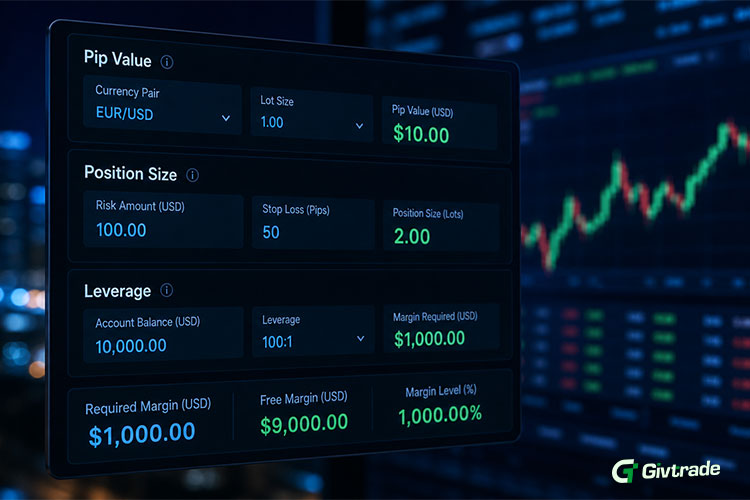
قيمة النقطة = حجم اللوت × 10 دولارات لكل لوت قياسي (للأزواج المقومة بالدولار الأمريكي)
تقوم منصة MetaTrader 5 بحساب قيمة النقطة تلقائياً في نافذة تأكيد التداول قبل التنفيذ. المتداولون الذين يتحققون من هذا الرقم قبل فتح أي صفقة يتخذون قرارات بشأن أحجام صفقاتهم بشكل أفضل بكثير من أولئك الذين يحسبون الخسارة المحتملة فقط بعد فتح المركز. يمكن الاطلاع على قيم النقاط ومواصفات العقود لكل أداة مالية مباشرة في المنصة.
ما هي الرافعة المالية في تداول الفوركس وعقود الفروقات؟
الرافعة المالية هي النسبة بين الهامش الذي تودعه وحجم التعرض الكلي للسوق الذي تتحكم فيه صفقتك. فنسبة 100:1 تعني أن هامشاً بقيمة 1,000 دولار يمنحك تحكماً في تعرض للسوق بقيمة 100,000 دولار. تجعل الرافعة المالية الأسواق في متناول متداولي التجزئة ذوي الحسابات الصغيرة، كما أنها تضاعف الأرباح والخسائر على حد سواء وبشكل متناسب.
يوضح الصف الخاص بنسبة 100:1 (المظلل) لماذا لا تعني الرافعة المالية القصوى بالضرورة الرافعة المالية المثالية: فحدوث تحرك عكسي في السوق بنسبة 1% عند استخدام رافعة مالية كاملة بنسبة 100:1 يؤدي إلى خسارة كامل مبلغ الهامش المودع. المتداولون في الإمارات ودول مجلس التعاون الخليجي الذين يحافظون على حساباتهم خلال جلسات التداول المتقلبة يطبقون دائماً رافعة مالية أقل بكثير من الحد الأقصى المتاح.
كيف تعمل الرافعة المالية: مثال عملي
أودع متداول في الإمارات 500 دولار ويرغب في تداول زوج اليورو/دولار. اختار حجم 0.01 لوت مع أمر وقف خسارة عند 30 نقطة:
• المركز: 0.01 لوت = 1,000 وحدة
• قيمة النقطة عند 0.01 لوت: حوالي 0.10 دولار لكل نقطة
• وقف الخسارة: 30 نقطة = خسارة قصوى قدرها 3 دولارات
• المخاطرة كنسبة مئوية من الحساب: 3 دولارات ÷ 500 دولار = 0.6% - وهي نسبة تقع ضمن قاعدة 1-2% الموصى بها
هذا هو التسلسل الصحيح: حدد الحد الأقصى للمخاطرة بالدولار أولاً ← حدد مستوى وقف الخسارة من الرسم البياني ← احسب حجم اللوت ← نفذ الصفقة. حجم اللوت هو نتيجة الحساب وليس نقطة البداية أبداً. المتداولون الذين يبدأون باختيار حجم اللوت ثم يتحققون مما قد يخسرونه يتبعون ترتيباً خاطئاً، وغالباً ما يصفون أكبر خسائرهم بأنها الصفقات التي تخطوا فيها هذا التسلسل.
الهامش: الضمان المودع خلف كل صفقة برافعة مالية
الهامش هو جزء من رصيد حسابك يتم حجزه كضمان لمركز مفتوح. إنه ليس رسوماً، بل يتم استرداده عند إغلاق الصفقة. وطالما أن الصفقة مفتوحة، يظل هذا الهامش محجوزاً.
• الهامش المطلوب: المبلغ المحجوز كضمان. يظهر في علامة تبويب التداول (Trade).
• الهامش المتاح: الرصيد المتبقي الذي يمكن استخدامه لفتح صفقات جديدة أو امتصاص الخسائر العائمة.
• نداء الهامش (Margin Call): يتم تفعيله عندما تؤدي الخسائر العائمة إلى انخفاض حقوق الملكية عن نسبة مئوية محددة من الهامش المطلوب. توفر GivTrade حماية من الرصيد السلبي لعملاء التجزئة، مما يعني أنك لا يمكن أن تخسر أكثر من الأموال التي أودعتها.
كيف تعمل النقاط (Pips) وعقود اللوت (Lots) والرافعة المالية معاً
مثال عملي: 0.01 لوت من زوج اليورو/دولار أمريكي برافعة مالية 100:1. الهامش المطلوب: ~10.85 دولار. قيمة النقطة: ~0.10 دولار. تحرك السعر 50 نقطة لصالحك يعني ربحاً قدره +5 دولارات. نفس الـ 50 نقطة عند حجم 1.00 لوت تعني ربحاً قدره +500 دولار. الأرقام متطابقة؛ المتغير الوحيد هو حجم اللوت. يتعامل المتداولون المتمرسون في دول مجلس التعاون الخليجي مع حجم اللوت كمتغير وحيد يتحكمون فيه بعناية فائقة، ويستخدمون الرافعة المالية كأداة يتم توظيفها بوعي وليس بأقصى طاقتها. تتوفر مجموعة الأدوات الكاملة التي تنطبق عليها هذه الآليات على صفحة الأسواقفي GivTrade.
ما يحتاج متداولو الإمارات ودول مجلس التعاون الخليجي إلى تذكره
• النقطة (Pip) هي وحدة قياس حركة السعر، وليست وحدة نقدية. قيمتها بالدولار تعتمد كلياً على حجم اللوت.
• حجم اللوت يحدد قيمة النقطة، وقيمة النقطة تحدد المخاطرة بالدولار لكل نقطة. احسب ذلك قبل الدخول في الصفقة.
• الرافعة المالية تضخم الأرباح والخسائر على حد سواء. النسبة تخبرك بأقصى تعرض ممكن للسوق، وليس بالضرورة التعرض الذي يجب أن تستخدمه.
• الهامش هو ضمان وليس تكلفة. الهامش الحر يحميك من نداءات الهامش أثناء التحركات السعرية المعاكسة.
• التسلسل الصحيح: حدد المخاطرة بالدولار أولاً ← ضع أمر وقف الخسارة بناءً على الرسم البياني ← احسب حجم اللوت ← نفذ الصفقة.
الأسئلة الشائعة
ما هي النقطة (Pip) في تداول العملات الأجنبية؟
النقطة (Pip) هي أصغر حركة سعرية قياسية في زوج العملات، وهي تمثل الخانة العشرية الرابعة لمعظم الأزواج الرئيسية، أو الخانة العشرية الثانية لزوج الدولار الأمريكي/الين الياباني. إذا تحرك زوج اليورو/دولار من 1.0850 إلى 1.0851، فهذه حركة بمقدار نقطة واحدة.
ما هو اللوت (Lot) في تداول العملات الأجنبية؟
اللوت هو الوحدة القياسية لحجم التداول. اللوت القياسي يساوي 100,000 وحدة (~10 دولارات لكل نقطة في زوج اليورو/دولار)، واللوت المصغر (Mini) يساوي 10,000 وحدة (~1 دولار لكل نقطة)، واللوت الميكرو (Micro) يساوي 1,000 وحدة (~0.10 دولار لكل نقطة). تدعم حسابات التداول في GivTrade حداً أدنى لحجم اللوت يبلغ 0.01 (ميكرو).
ماذا تعني الرافعة المالية في تداول العملات الأجنبية؟
الرافعة المالية هي النسبة بين الهامش الذي أودعته وإجمالي تعرض السوق الذي تتحكم فيه صفقتك. الرافعة المالية بنسبة 100:1 تعني أن هامشاً بقيمة 1,000 دولار يمنحك تحكماً في تعرض للسوق بقيمة 100,000 دولار. الرافعة المالية تضخم الأرباح والخسائر بشكل متناسب.
ما هو نداء الهامش (Margin Call)؟
يحدث نداء الهامش عندما تؤدي الخسائر العائمة إلى انخفاض حقوق ملكية الحساب عن نسبة مئوية محددة من الهامش المطلوب، مما يؤدي إلى الإغلاق التلقائي للصفقات. توفر GivTrade حماية من الرصيد السلبي لعملاء التجزئة، مما يعني أنك لا يمكن أن تخسر أكثر مما أودعته.
أين يمكنني العثور على إجابات لأسئلة أخرى تتعلق بالحساب؟
صفحة الأسئلة الشائعة تغطي الأسئلة التشغيلية الشائعة. للاستفسارات المحددة حول مواصفات العقود، أو إعدادات الرافعة المالية، أو إعداد الحساب، فإن فريق الدعم متاح للمساعدة.
الخلاصة
تعد النقاط (Pips)، واللوتات (Lots)، والرافعة المالية ثلاثة أجزاء من عملية حسابية واحدة تحدد مقدار الربح أو الخسارة في كل صفقة. تقيس النقطة مدى تحرك السوق، ويحدد اللوت قيمة كل نقطة بالدولار، بينما تحدد الرافعة المالية حجم انكشافك على السوق الذي يتحكم فيه هامشك. إن فهم كيفية ترابط هذه العناصر الثلاثة - وإجراء الحسابات المالية قبل تنفيذ أي صفقة - هو العادة الأكثر شيوعاً بين المتداولين في الإمارات ودول مجلس التعاون الخليجي الذين ينجحون في تنمية حساباتهم بدلاً من خسارتها.
تحذير من المخاطر: ينطوي تداول العملات الأجنبية (الفوركس) وعقود الفروقات (CFDs) على الهامش على مستوى عالٍ من المخاطر وقد لا يكون مناسباً لجميع المستثمرين. هذه المقالة لأغراض إعلامية وتعليمية فقط. شركة GivTrade Mauritius، المسجلة برقم 197387، مرخصة ومنظمة من قبل لجنة الخدمات المالية (FSC) بموجب الترخيص رقم GB22201329.