

How to Read a Forex Quote: Bid, Ask & Currency Pair Notation | UAE Guide (2026)
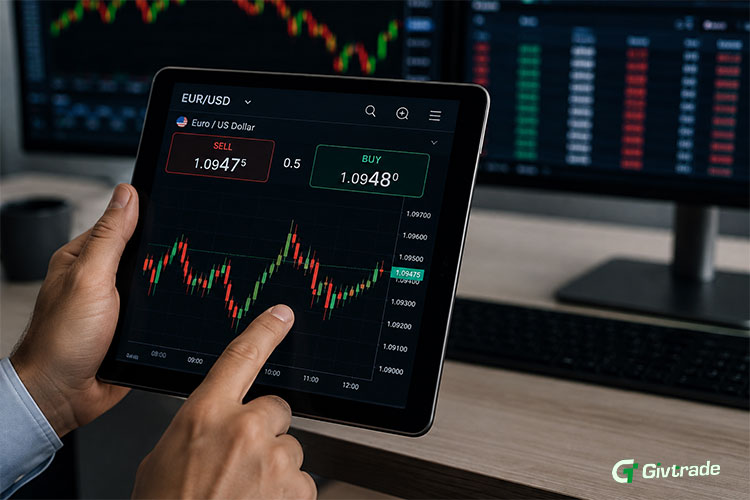
Table of Contents
1. What Is a Forex Quote?
2. Base Currency and Quote Currency: Reading the Pair
3. Bid and Ask: The Two Prices in Every Quote
4. The Spread: The Difference Between Bid and Ask
5. How to Read Major, Minor and Exotic Pair Quotes
6. Direct and Indirect Quotes: What This Means for UAE Traders
7. How Quotes Are Displayed in MetaTrader 5
8. Common Mistakes When Reading Forex Quotes
9. Frequently Asked Questions
10. The Bottom Line
A forex quote shows the exchange rate between two currencies, expressed as how much of the second currency (the quote currency) is needed to buy one unit of the first currency (the base currency). Every forex quote has two prices: the bid (the price at which you can sell the base currency) and the ask (the price at which you can buy the base currency). The difference between the two is the spread - the transaction cost built into every trade. For UAE, Saudi Arabia, Kuwait, Qatar, Bahrain and Oman traders accessing forex markets, reading a quote correctly is the most basic skill required before any position can be intelligently placed.
What Is a Forex Quote?
A forex quote is the price of one currency expressed in terms of another. It always involves two currencies, always written in a specific order, and always shows two prices simultaneously. Here is a complete example:
Every forex quote on every platform follows this structure. The pair name tells you which two currencies are involved and in which order. The two prices tell you the cost of buying or selling. Nothing else is needed to understand the quote - once these two concepts are clear, every other pair on the platform reads identically.
Base Currency and Quote Currency: Reading the Pair
Every currency pair is written as: BASE / QUOTE. The base currency is always the first one - it is the currency being priced. The quote currency is always the second one - it is the currency in which the price is expressed.
The USD/JPY row (highlighted) is the most important exception for beginners to understand: in EUR/USD and GBP/USD, the dollar is the quote currency (expressed in the second position). In USD/JPY and USD/CHF, the dollar is the base currency (first position). This means when USD/JPY rises, the dollar is strengthening against the yen - opposite to what “rising” implies for EUR/USD (where a rising number means the euro is strengthening). Getting this right prevents the most common interpretation error among new UAE traders who are used to thinking of the dollar as their reference currency.
Bid and Ask: The Two Prices in Every Quote
Every forex quote simultaneously shows two prices: the bid and the ask. Understanding which is which - and which one you use for which action - is essential before placing any trade:
A memory aid that experienced GCC traders consistently describe using when they first learned forex quotes: you always buy at the higher price and sell at the lower price - the broker’s pricing is always against you by the spread. If EUR/USD shows 1.0850 / 1.0852, buying at 1.0852 and immediately selling at 1.0850 produces a 2-pip loss - the spread cost paid on entry. This immediate deficit is why the trade needs to move in your favour by at least the spread amount before you break even.
The Spread: The Difference Between Bid and Ask
The spread is the bid-ask gap - the difference between the two quoted prices. It is the broker’s transaction cost and is paid at entry on every trade. In the EUR/USD example above (1.0850 / 1.0852), the spread is 2 pips.
The USD/ZAR row (highlighted) illustrates the dramatic difference in spreads between major and exotic pairs. A 2-pip spread on EUR/USD means a trade needs to move 2 pips to break even. A 200-pip spread on an exotic pair means the trade needs to move 200 pips in your favour before you cover the cost of entry alone. GCC traders who start with major pairs avoid this problem entirely - and gradually introduce more exotic instruments only after understanding the spread’s dollar cost for each.
How to Read Major, Minor and Exotic Pair Quotes
Major Pairs
Major pairs all involve the US dollar and one of seven major currencies: EUR, GBP, JPY, CHF, CAD, AUD, or NZD. They have the tightest spreads, deepest liquidity, and most predictable quote behaviour. All GCC traders learn forex on major pairs first.
Minor Pairs (Cross Pairs)
Minor pairs involve two major currencies but exclude the US dollar: EUR/GBP, EUR/JPY, GBP/JPY, AUD/JPY. Their quotes are read exactly the same way - base currency / quote currency, bid / ask - but their spreads are typically wider than major pairs because liquidity is lower. EUR/GBP shows how many pounds buy one euro; GBP/JPY shows how many yen buy one pound.
Exotic Pairs
Exotic pairs combine a major currency with an emerging market or smaller economy currency: USD/TRY, USD/ZAR, USD/SGD, USD/AED. Their quotes follow the same structure but carry dramatically wider spreads (sometimes hundreds of pips) and are subject to much larger price swings from local political and economic events. Most experienced GCC traders avoid exotic pairs entirely until they have a strong command of major pair mechanics.
Direct and Indirect Quotes: What This Means for UAE Traders
A direct quote expresses the price of a foreign currency in terms of the domestic currency. An indirect quote expresses the price of the domestic currency in terms of a foreign currency. For UAE traders, the AED is pegged to the USD at a fixed rate of 3.6725, so USD is the effective domestic reference currency for most GCC traders.
In practice:
• EUR/USD is an indirect quote for UAE traders: it shows how many USD (your domestic reference) buy one EUR (foreign). A rising EUR/USD means EUR is strengthening against USD.
• USD/JPY is a direct quote from the UAE trader’s perspective (USD as the base): it shows how many JPY buy one USD. A rising USD/JPY means USD is strengthening against JPY.
The practical implication for a UAE trader: when EUR/USD rises from 1.0850 to 1.0900, EUR has strengthened and USD has weakened - meaning the dirham, which is pegged to USD, has also weakened in that relationship. Most UAE traders think in USD terms naturally because of the peg, which means EUR/USD’s direction is often intuitively read correctly without needing to process the indirect quote structure explicitly.
How Quotes Are Displayed in MetaTrader 5
In MetaTrader 5, forex quotes are displayed in the Market Watch window (View → Market Watch). Each row shows the instrument name, the bid price, and the ask price side by side. When you right-click on any instrument and select “Chart Window” or “New Order,” the quote updates in real time.
Key MT5 quote display features that GCC traders use regularly:
• The spread column: Right-click on the Market Watch column header and enable “Spread” to add a column showing the current pip spread for each instrument. This makes it easy to compare which pairs have the tightest spreads at any given moment.
• Pipette display: MT5 displays quotes to 5 decimal places on most major pairs (a pipette - one-tenth of a pip). EUR/USD might show 1.08524 rather than 1.0852. The fifth decimal is the pipette; the fourth decimal is the pip. Traders measure moves in pips (fourth decimal) not pipettes.
• One-click trading quotes: When a trade ticket is open, the bid and ask update live. The blue button (Buy at Ask) and the red/orange button (Sell at Bid) show the current executable prices. The price you see on the button is the price your order will execute at if clicked immediately.
Common Mistakes When Reading Forex Quotes
• Confusing which price to use for buying vs selling. You buy at the ask (higher price) and sell at the bid (lower price). New traders sometimes try to buy at the bid or sell at the ask - which is simply not possible. The market always prices against you by the spread.
• Misreading USD/JPY as a strengthening yen when the quote rises. When EUR/USD rises, EUR is strengthening. When USD/JPY rises, USD is strengthening (and yen is weakening). Because USD is the base in USD/JPY, the same direction means the opposite thing relative to the dollar compared to EUR/USD.
• Ignoring the spread when setting profit targets. A 10-pip profit target on a 2-pip spread instrument means price needs to move 12 pips in your favour (10 pips profit + 2 pips spread recovery). Traders who set targets without accounting for the spread start from a deficit they haven’t accounted for. Understanding how pip value translates to dollar risk on any trade is covered in our leverage in forex trading guide.
• Assuming the same pair always has the same spread. Spreads on EUR/USD during the London-NY overlap (5:00–9:00 PM UAE time) might be 1.2 pips. The same pair during the Asian session or during an NFP release might be 5–10 pips. Always check the live spread in MT5 before entering, not the typical or advertised spread.
Frequently Asked Questions
What is a forex quote?
A forex quote is the price of one currency expressed in terms of another, showing two prices simultaneously: the bid (the price you receive when selling the base currency) and the ask (the price you pay when buying the base currency). The pair name (e.g., EUR/USD) identifies the two currencies: the first is the base currency being priced, and the second is the quote currency in which the price is expressed.
What is the bid price in forex?
The bid is the lower of the two prices in a forex quote. It is the price at which your broker will buy the base currency from you - meaning it is the price you receive when you click SELL. If EUR/USD shows 1.0850 / 1.0852, the bid is 1.0850. A sell order fills at the bid.
What is the ask price in forex?
The ask is the higher of the two prices in a forex quote. It is the price at which your broker will sell the base currency to you - meaning it is the price you pay when you click BUY. If EUR/USD shows 1.0850 / 1.0852, the ask is 1.0852. A buy order fills at the ask.
What does EUR/USD 1.0850 mean?
EUR/USD at 1.0850 means it costs 1.0850 US dollars to buy one euro. EUR is the base currency (what is being priced) and USD is the quote currency (what it is priced in). If the rate rises to 1.0900, the euro has strengthened - it now costs more dollars to buy one euro. If it falls to 1.0800, the euro has weakened.
What is the spread in a forex quote?
The spread is the difference between the ask and bid prices in a forex quote. It is the transaction cost paid at entry on every trade. If EUR/USD shows 1.0850 / 1.0852, the spread is 2 pips. Major pairs like EUR/USD have tight spreads (1–3 pips typically during peak hours). Exotic pairs can have spreads of hundreds of pips. The full list of instruments available is on GivTrade’s markets page.
When I buy a currency pair, which price do I pay?
You buy at the ask price - the higher of the two quoted prices. You sell at the bid price - the lower. This means you always start a trade slightly in the negative by the amount of the spread, and the trade must move in your favour by at least the spread before breaking even.
The Bottom Line
Reading a forex quote is the most foundational skill in trading: without it, every price you see on the platform is ambiguous. The base currency is what is being priced; the quote currency is what it is priced in. The bid is what you receive when you sell; the ask is what you pay when you buy. The spread is the difference between the two, paid at entry on every trade.
For UAE, Saudi Arabia, Kuwait, Qatar, Bahrain and Oman traders, reading EUR/USD, USD/JPY, GBP/USD, and the other major pairs available on GivTrade accurately is a five-minute exercise that eliminates a category of confusion that otherwise compounds through every stage of learning. Once the quote structure is intuitive, every other concept - pips, position sizing, stop-loss placement - becomes easier because the price reference is clear.
Risk Warning: Trading Forex and Contracts for Difference (CFDs) on margin carries a high level of risk and may not be suitable for all investors. Retail clients could sustain a total loss of deposited funds. This article is for informational and educational purposes only. GivTrade Mauritius, registration No. 197387, is authorized and regulated by the Financial Services Commission (FSC) License No. GB22201329.