

Why Most Forex Traders Lose Money in Their First 90 Days - GCC Trader's Guide (2026)
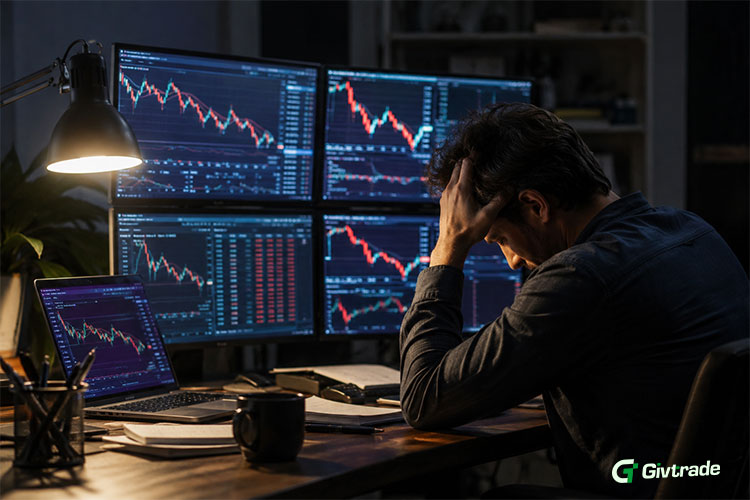
Most forex traders who lose their first account do not lose it because they picked the wrong strategy. They lose it because of what happens between the strategy and the execution.
The first 90 days of live forex trading are where more accounts are lost than at any other stage. UAE and GCC traders who make it through that window consistently share the same small set of habits. Those who don't share the same small set of mistakes.
This is not a list of trading strategies. It is an honest account of the behavioural patterns that determine whether a new GCC trader survives long enough to develop an edge - or exits the market before they ever get the chance.
Why the First 90 Days Are the Highest-Risk Period
A new trader in their first 90 days is operating with three simultaneous disadvantages: limited market experience, real money on the line for the first time, and emotions that have not yet been tested by actual losses. The combination is more dangerous than any individual factor in isolation.
The demo account period - which most GCC traders spend weeks or months on - removes the emotional component entirely. A 200-pip loss on a demo account produces no meaningful reaction. The same loss on a live account with real capital produces fear, frustration, and the urge to recover it immediately. That urge - not the loss itself - is what drives the decisions that compound losses into account wipeouts.
The traders who survive the first 90 days are not necessarily more skilled than those who don't. They are more prepared for what the emotional reality of live trading feels like, and they have systems in place that override impulse-driven decisions before those decisions can be acted on.
The Five Patterns That Define the First 90 Days
Every one of these patterns is behavioural, not strategic. The trading setup that preceded them was often sound. The execution that followed it was not.
What GCC Traders Who Survive Do Differently
They define risk before the trade, not after. The traders who make it through the first 90 days decide the maximum dollar risk on every trade before entering - typically 1-2% of account balance. On a $1,000 account that is $10-20 per trade. That number feels small. It is the number that keeps the account alive long enough to learn. A trader who risks 10% per trade needs only 10 consecutive losses to lose the account. A trader who risks 1% needs 100. The difference in survival time is not marginal - it is the difference between three weeks and two years.
They treat the stop loss as non-negotiable. Moving a stop loss when price approaches it is the single most destructive habit in early-stage trading. It converts a defined, manageable loss into an undefined one. Experienced GCC traders set the stop loss at the point where the trade idea is wrong - not at the point where the loss becomes uncomfortable - and they do not move it against the position under any circumstances. The stop loss is the mechanism that makes risk management work. Without it, the 1-2% rule is meaningless.
They check the economic calendar before every session. The economic calendar is the daily pre-trade checklist for GCC traders who consistently avoid being caught off guard by volatility. NFP, CPI and FOMC decisions can move major forex pairs 80-150 pips in seconds. New traders who are unaware of these releases hold full-size positions into the announcement and experience losses they cannot explain. Experienced traders either reduce position size before the event or stay out entirely and re-enter after the initial volatility settles.
They keep a trading journal. The traders who improve fastest in the first 90 days are those who record every trade - entry, exit, setup rationale, and emotional state at the time of entry. Patterns in losing trades become visible within weeks. A trader who journals consistently will typically identify their worst habit - overtrading on Mondays, revenge trading after a stop-out, oversizing after a winning streak - within the first month. Without the journal, the same mistakes repeat without recognition.
They separate the outcome from the decision quality. A trade that hits its stop loss is not automatically a bad trade. A trade that makes money despite breaking every rule is not automatically a good one. GCC traders who build long-term consistency evaluate trades on the quality of the decision at the time of entry - was the setup valid, was the risk defined, was the size appropriate - not on whether it won or lost. This distinction, which sounds simple, takes most traders months to genuinely internalise.
The GivTrade Take
The first 90 days of live trading are a test of discipline, not strategy. The traders who pass that test are not the ones who found the best indicator or the most profitable setup. They are the ones who managed their risk consistently, kept their position sizes small, checked the economic calendar before every session, and did not let a single losing trade drive the next entry decision.
For GCC traders who have covered the mechanics - how leverage works in our leverage guide, how risk management works in our risk management guide - the next step is not finding a better strategy. It is building the behavioural discipline to execute the strategy you already have, consistently, regardless of what the last trade did.
The market does not reward the most active traders. It rewards the most disciplined ones.
Explore trading accounts on GivTrade and check this week's key risk events on the economic calendar before your next session.
Frequently Asked Questions
Why do most forex traders lose money?
The primary causes are behavioural - overtrading, revenge trading, moving stop losses, and oversizing positions - rather than strategic. Most new traders have a workable setup; what fails is the discipline to execute it consistently under the emotional pressure of real capital at risk.
How long does it take to become consistently profitable in forex?
Most consistently profitable traders describe a 12-24 month learning period on live accounts before achieving consistent results. The first 90 days are the highest-risk window - the period where the majority of first accounts are lost.
What is revenge trading and how do GCC traders avoid it?
Revenge trading is re-entering the market immediately after a loss with the goal of recovering the money quickly. It is avoided by implementing a rule of waiting a defined period - typically the end of the current session - before placing another trade after a stop-out, regardless of market conditions.
How much should a beginner risk per trade?
1-2% of account balance per trade is the most widely cited starting framework. On a $1,000 account that is $10-20 per trade - small enough to survive a losing streak of 20-30 trades without losing the account, which provides enough time to identify and correct the pattern causing the losses.
Does keeping a trading journal actually help?
Consistently - traders who journal identify their worst recurring habits within 4-6 weeks of starting. Patterns invisible in real-time become obvious in retrospect across 20-30 recorded trades.
Risk Warning: Trading forex and Contracts for Difference (CFDs) on margin carries a high level of risk. Retail clients could sustain a total loss of deposited funds. This article is for informational and educational purposes only and does not constitute investment advice. GivTrade Mauritius, registration No. 197387, is authorized and regulated by the Financial Services Commission (FSC) License No. GB22201329.